

The U.S. average on-highway diesel price was $6.382 per gallon for the week of September 28, 2026, according to the EIA weekly survey — down 14.7 cents from the prior week's $6.529, but about 70% higher than a year earlier ($3.754). AAA reported a record national average of $6.51 on September 21. Tight distillate inventories and crude above $100 a barrel are the main drivers. For fleets and energy operators that means higher operating costs, wider surcharge gaps and a larger incentive for fuel theft, because the fuel already in tanks is worth more.
In September 2026 diesel moved faster than most fleet budgets can follow. The EIA weekly on-highway index rose from roughly $5.60 at the start of the month to $6.529 for the week of September 21, then eased to $6.382 for the week of September 28. AAA's daily national average reached $6.51 on September 21, the highest in its records. A year earlier the same EIA index stood at $3.754.
Why diesel is this high
Two pressures are stacking. Crude benchmarks climbed above $100 a barrel in mid-September amid supply disruptions affecting Middle East energy infrastructure and shipping lanes, and crude is roughly half the cost of a gallon at the pump. At the same time, U.S. distillate inventories were reported about 13% below their five-year average in mid-September even with refineries running hard. Federal regulators issued temporary hours-of-service flexibility for fuel haulers to keep supply moving — useful for logistics, but it does not add refining capacity.
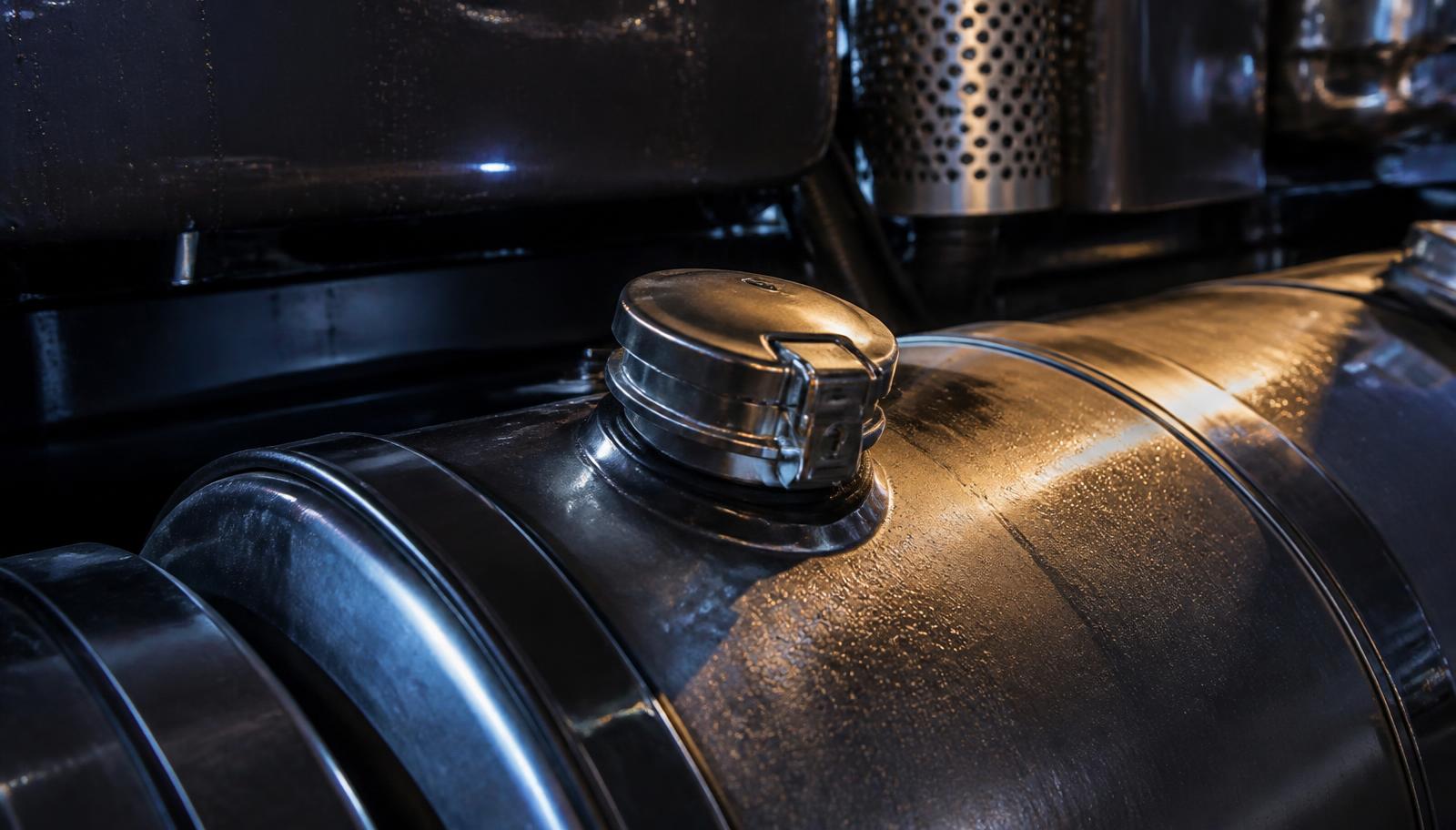
At $6 diesel, a full set of saddle tanks is no longer a running cost. It is inventory.
How it reaches the industry
- Carriers and owner-operators pay at the pump weeks before surcharges and freight payments catch up.
- Fuel-surcharge schedules pegged to the EIA index reprice, but contract lag leaves gaps on both sides.
- Regional spreads widen — the West Coast and California run well above the Gulf Coast.
- Energy and field operations see the same pressure in hauling, generators and site fuel.
- Shippers absorb part of it in freight rates; margins on fuel-intensive lanes compress.
The security side of a price spike
Price spikes change incentives. Fuel that sits overnight in saddle tanks, yard tanks and site storage is worth more to resell, and it is usually protected by little more than a cap. The exposure is not new; the value at risk is. And fuel loss is rarely dramatic — it is a repeated small draw that hides inside fleet MPG averages until a month-end variance makes someone ask.
The practical response is to control the opening itself rather than explain the variance afterwards. Nuve physically protects the fill point, cap or hatch so the tank opens only on an authorization issued through the platform — including remotely — and records every access and tamper attempt with a vehicle, a site and a time attached.
SolutionFuel theft preventionPhysical access control of the tank, platform authorization, tamper alerts and access history for fleets, yards and terminals.Read the solution →What to do this quarter
- Identify the vehicles and sites with the longest unattended dwell — that is where fuel exposure concentrates.
- Treat yard and site tanks as stored inventory, with defined access by role.
- Decide what should happen the moment a tank is opened without an authorization.
- Review hauled product too: crude and fuel in transit face the same incentive.
Figures in this article come from the U.S. Energy Information Administration weekly retail on-highway diesel survey (weeks of September 21 and 28, 2026) and AAA's national average as reported on September 21, 2026. Prices change weekly; check the EIA release for the current number.