
Cargo theft prevention
Cargo theft prevention for trucking and logistics operations
Cargo is most exposed when it is separated from the power unit and from supervision. Nuve keeps custody of the load observable — door and lock status, location, dwell and sensor data in one record.
In short
Cargo theft prevention depends on knowing the custody state of a load at every moment, not just its last location ping. Nuve connects electronic locks, door and light sensors, trailer telemetry and dwell monitoring into a single custody record, so an unauthorized door opening or an unplanned stop becomes an alert with a place and a time. Because the same record covers the whole trip, disputed deliveries and repeat-location patterns can be reviewed after the fact.
- Trailer and container theft prevention
- Unauthorized door-opening detection in transit
- Drop-lot and staging-yard protection
- Dwell and unplanned-stop alerting
- Custody records for high-value and sensitive freight
- Evidence for claims, disputes and investigations
Protection architecture
Three layers, applied to the asset.
Layer 01
Access protection on the load
Protection at the doors and connections that open the trailer.
- Electronic locks with role-based access
- Door, light and seal sensors
- Remote authorization of openings
- Yard and drop-lot protection
Layer 02
Movement & dwell monitoring
Where the load is, and how long it has been there without supervision.
- Trailer and container location history
- Dwell time and unplanned-stop detection
- Geofence and route deviation events
- Real-time alerts to dispatch and security
Layer 03
Custody record & integration
One reviewable chain of custody per load, available to other systems.
- Chronological custody record per shipment
- Evidence for claims and investigations
- Recurring-location and pattern review
- APIs and TMS / WMS integration
The exposure window
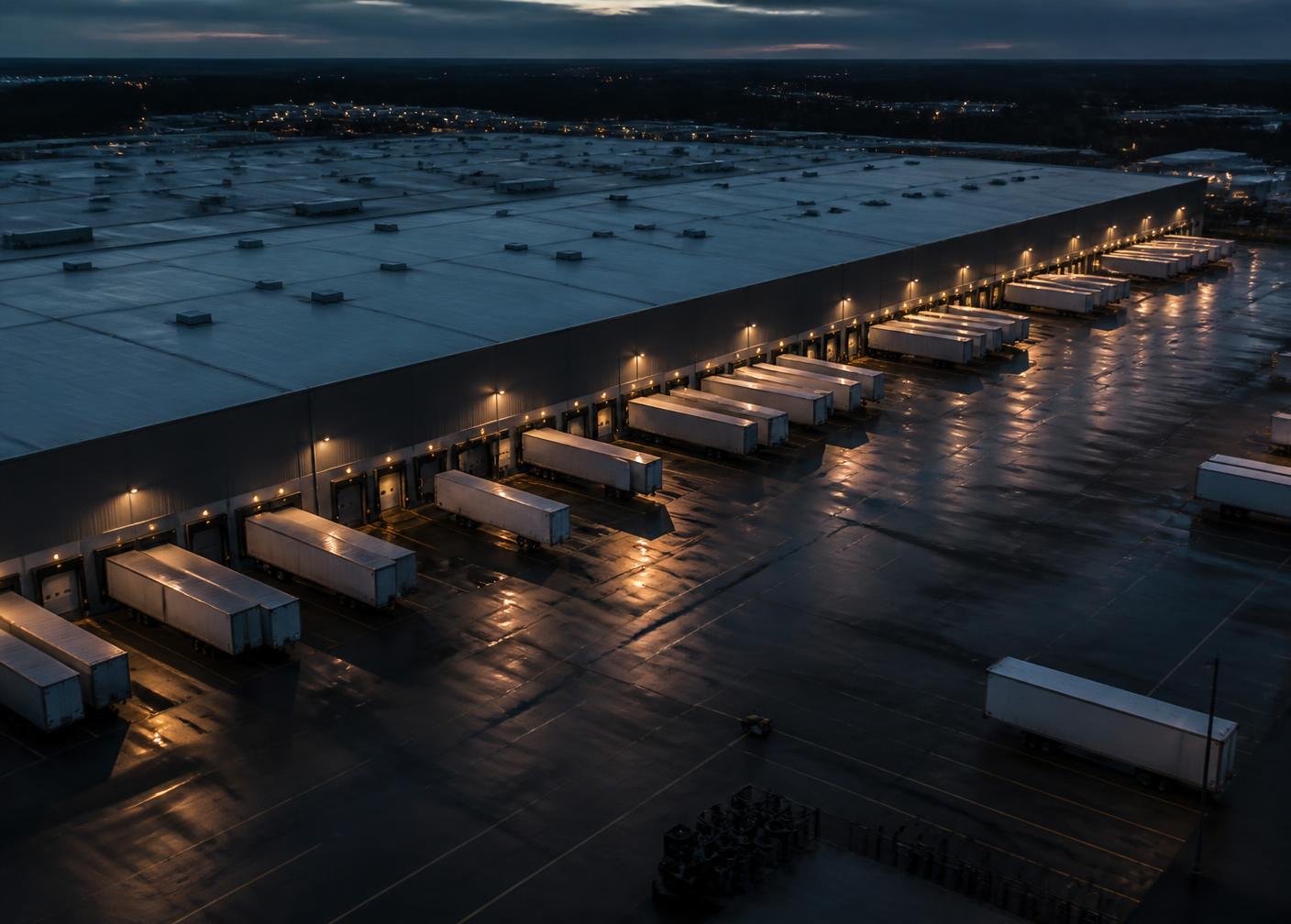
Most loss happens in the gaps: a drop lot over a weekend, an unscheduled stop, a staging yard where nobody is assigned to a specific trailer. In those windows the trailer is still trackable but its custody state is unknown — nobody can say whether the doors have been opened.
- Unattended trailers in drop lots and staging yards
- Unplanned stops and route deviations
- Door openings outside authorized windows
- Handoffs where custody is never explicitly recorded
Custody as a continuous record
Instead of a location trail plus a paper handoff, each load carries one record: who was authorized, when doors opened, where the unit dwelled, what sensors reported. Dispatch and security see a state they can act on during the trip, and the same record supports claims and investigation afterwards.
Fits the operation, not the other way round
Alerts route to the people who already handle exceptions, with acknowledgement and an auditable trail. Load and event data exchanges with TMS and WMS systems through APIs, so protection does not add a parallel process for drivers or dispatchers.
Questions
Common questions.
- Why is cargo theft so hard to prevent?
- Because the vulnerable moments are ordinary ones. A trailer parked in a drop lot looks the same whether it is secure or already open, and location tracking alone does not report custody state. Prevention requires access protection and door-level detection alongside location.
- Does this replace GPS tracking?
- No, it uses it. Location is one input. The difference is combining it with lock and door status, dwell and sensor events so the system reports what is happening to the load, not only where it is.
- Can drivers open a trailer without calling in?
- Access is configured by role and by operation. Openings can require remote authorization, or be permitted within defined conditions — either way the opening is recorded as an event on the load's custody record.
- Does it work for unpowered trailers and containers?
- Yes. Trailers, containers and other unpowered assets are treated as their own asset records with their own devices, telemetry and event history.
Next step
Start with the asset you need to protect.
Related
- Fuel theft preventionFuel loss is a continuous, quiet expense. Nuve prevents it at the source: the tank opening itself is physically controlled, and every access is authorized and recorded through the platform.
- Permian Basin & TexasDistributed sites, long distances between them and limited on-site presence. Nuve builds protection architectures suited to how West Texas and southeastern New Mexico operations actually run.
Tell us what you need to protect.
Every engagement starts the same way: the asset, the exposure, and the operation around it. We will tell you what a protection architecture for it looks like.