
Petroleum theft prevention
Petroleum theft prevention for oil and gas operations
An industrial asset protection architecture for crude oil and refined product: physical access protection at the valve and hatch, remote monitoring and tamper detection, and operational visibility across distributed sites.
In short
Petroleum theft almost always begins at an access point — a discharge valve, a tank hatch, a loading connection at a remote tank battery. Nuve assembles a protection architecture around those points so unauthorized access is restricted, detected and recorded as it happens, instead of being discovered later during reconciliation. It combines physical access protection, connected monitoring with tamper detection, and event data that integrates with the operational platforms a producer or midstream operator already runs.
- Crude oil theft prevention at producing sites
- Fuel theft prevention at storage and loading points
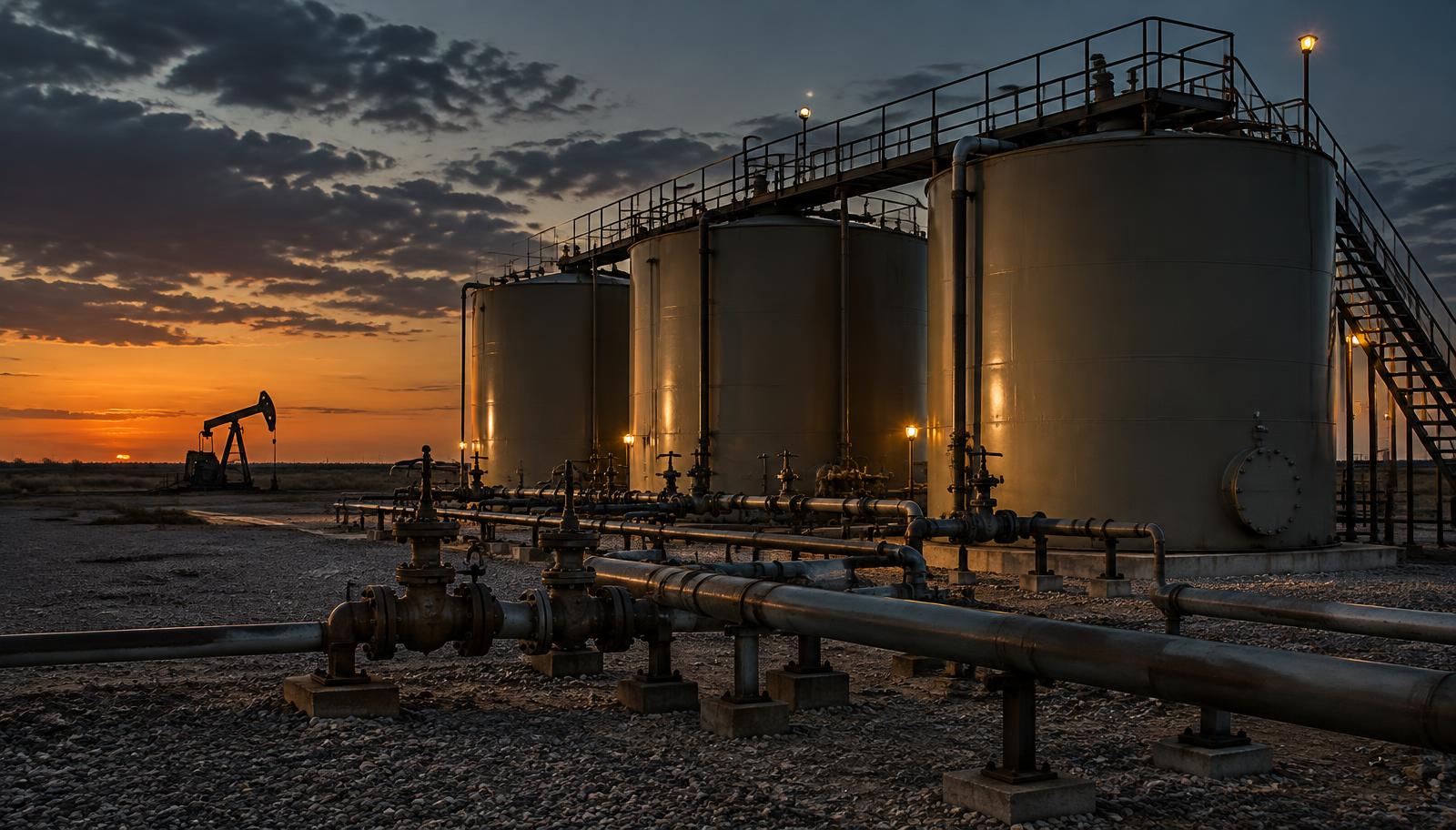
- Protection of remote and unmanned tank batteries
- Valve and hatch access control by role
- Tamper detection with real-time alerts
- Remote monitoring of geographically distributed assets
- API integration for event and telemetry data
Protection architecture
Three layers, applied to the asset.
Layer 01
Physical access protection
Protection applied directly at the points where product can leave the asset.
- Discharge valves and loading connections
- Tank hatches and storage access points
- Remote tank batteries and fuel storage assets
- Controlled, auditable access by role
Layer 02
Remote monitoring & tamper detection
Connected monitoring so an attempt on a distributed site is detected as it happens.
- Tamper and unauthorized-access detection
- Remote authorization of access requests
- Site and device telemetry
- Real-time alerts and escalation paths
Layer 03
Operational intelligence & integration
Events become operational records inside the systems the operation already runs.
- Event history per asset and access point
- Crude oil and fuel theft investigation support
- APIs and operational platform integration
- Reporting for operations, security and compliance
Where petroleum losses actually start
Losses rarely start with a dramatic breach. They start at a routine access point that nobody was watching: a valve turned outside of a scheduled haul, a hatch opened at a site with no on-site presence, a loading connection used by someone whose access was never revoked. Because the same points are used in legitimate operations every day, the theft looks like normal activity until volumes are reconciled.
- Discharge valves opened outside authorized windows
- Tank hatches accessed at unmanned locations
- Loading connections used by unverified personnel
- Access credentials that were never withdrawn
What protecting the access point changes
When access protection, detection and record-keeping are applied at the point itself, an attempt becomes an event with a timestamp, a location, an asset and an owner. Operations can act while it is happening rather than reconstructing it weeks later, and every legitimate access leaves a clean record that supports audit and investigation.
Built to fit the systems already in place
Nuve is designed as a protection layer, not a replacement for the platforms an operator already depends on. Event and telemetry data reaches monitoring and operational systems through APIs and integrations, so protection data lands where dispatch, security and compliance teams already work.
Questions
Common questions.
- Is this a smart lock?
- No. Physical access protection is one layer of three. On its own, a lock does not tell an operation that an attempt happened, who authorized it, or what the asset was doing at the time. Nuve combines access protection with remote monitoring, tamper detection and event history so the access point is both protected and observable.
- Which petroleum assets can be protected?
- Discharge valves, tank hatches, loading connections, storage points and remote tank batteries — the access points where product can physically leave the asset. Where no suitable device exists for a specific asset, Nuve designs and deploys hardware to close that gap.
- Does it work at sites with no on-site staff?
- Remote and unmanned sites are the primary case. Access requests can be authorized remotely, tamper and unauthorized-access attempts generate real-time alerts, and telemetry keeps a continuous record of the site without a permanent physical presence.
- How does it integrate with existing operational systems?
- Through APIs, webhooks and operational platform integration. Assets, events and history are available programmatically so protection data can be consumed by the systems an operator already runs rather than living in a separate dashboard.
- Who is it for?
- Producers, midstream operators, fuel distributors and industrial operators responsible for crude oil, refined product or fuel storage assets across multiple sites — particularly where sites are remote and losses currently surface in reconciliation.
Next step
Start with the asset you need to protect.
Related
- Fuel theft preventionFuel loss is a continuous, quiet expense. Nuve prevents it at the source: the tank opening itself is physically controlled, and every access is authorized and recorded through the platform.
- Permian Basin & TexasDistributed sites, long distances between them and limited on-site presence. Nuve builds protection architectures suited to how West Texas and southeastern New Mexico operations actually run.
Tell us what you need to protect.
Every engagement starts the same way: the asset, the exposure, and the operation around it. We will tell you what a protection architecture for it looks like.